
Environmental Law & NGT

Environmental Law & NGT
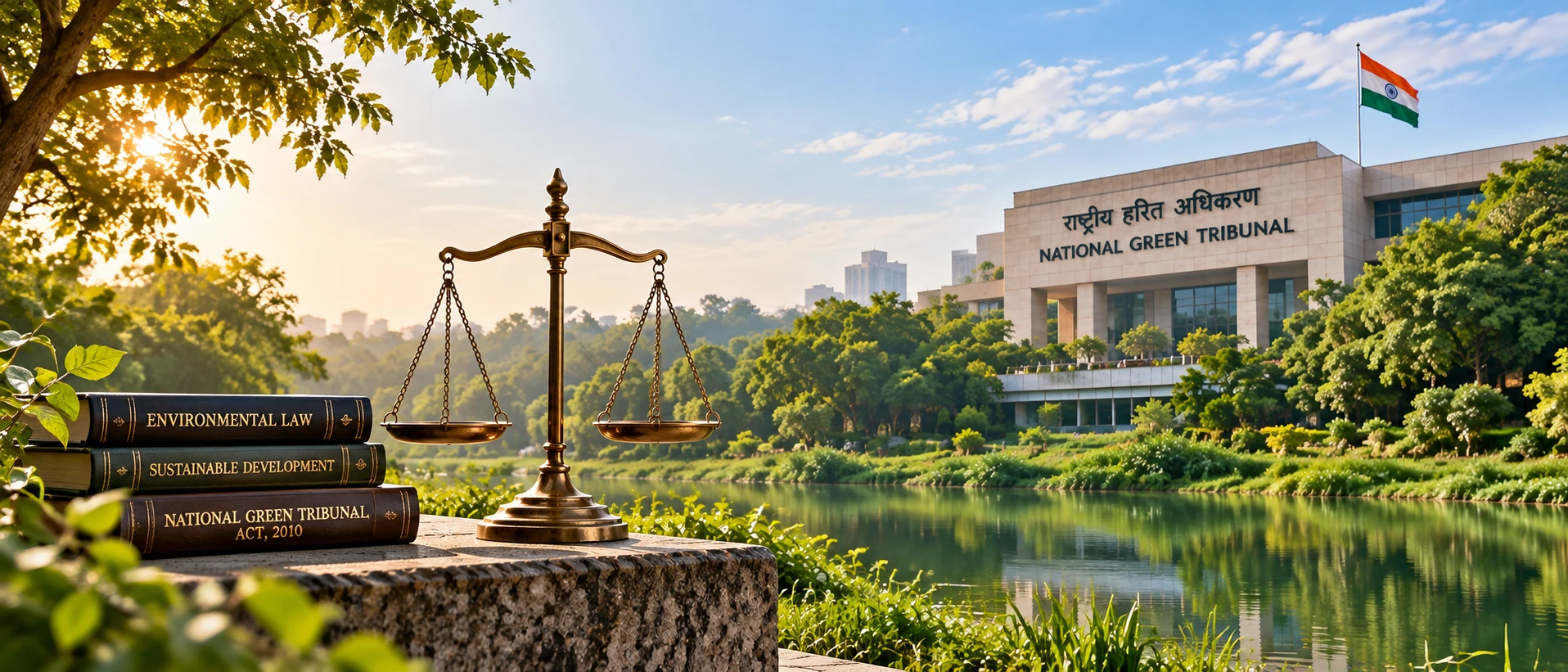
Environmental law in India is governed by a range of statutory and regulatory frameworks, including the Environment (Protection) Act, 1986, the Water (Prevention and Control of Pollution) Act, 1974, the Air (Prevention and Control of Pollution) Act, 1981, the Van (Sanrakshan Evam Samvardhan) Adhiniyam, 1980, the Biological Diversity Act, 2002, and other applicable legislation. The National Green Tribunal (NGT), established under the National Green Tribunal Act, 2010, exercises jurisdiction over specified environmental disputes, applications for relief, compensation and restitution, and appeals against orders falling within its statutory jurisdiction.
Environmental matters may involve pollution control, the protection and restoration of water bodies and wetlands, waste management, environmental clearances, forest conservation, wildlife protection and biodiversity. The nature of the dispute, the applicable statutory provisions, limitation requirements and the jurisdiction of the competent court, tribunal or authority determine the legal remedies that may be available. In exercising its jurisdiction, the NGT is required to apply the principles of sustainable development, the precautionary principle and the polluter pays principle in accordance with Section 20 of the NGT Act, 2010.
Key Areas of Environmental Law & NGT
An overview of the principal categories of environmental law matters and related issues arising under the applicable statutory and regulatory frameworks.
01. Water Bodies, Ponds & Wetlands
Matters relating to the protection, restoration and conservation of water bodies, ponds, lakes, tanks and wetlands.
- Common Matters: Encroachment and construction on water bodies, restoration and rejuvenation, pollution of water bodies and public trust doctrine.
- Key Issues: Public trust doctrine, protection of water bodies under applicable laws, and jurisdiction of the competent forum.
- Legal Focus: Environment (Protection) Act, 1986; Water (Prevention and Control of Pollution) Act, 1974; applicable wetlands rules and notifications; and relevant judicial principles, including the public trust doctrine.
02. Water Pollution & Groundwater
Matters relating to prevention and control of water pollution and regulation of groundwater.
- Common Matters: Discharge of effluents, industrial pollution, groundwater extraction and regulation, and remedial directions.
- Key Issues: Consent requirements, pollution control board directions, and applicable statutory remedies.
- Legal Focus: Water (Prevention and Control of Pollution) Act, 1974; Environment (Protection) Act, 1986; applicable groundwater regulation.
03. Air Pollution & Ambient Air Quality
Matters relating to prevention and control of air pollution and maintenance of ambient air quality.
- Common Matters: Industrial and vehicular emissions, air quality management and regulatory directions.
- Key Issues: Compliance with ambient air quality standards, consent requirements and applicable statutory remedies.
- Legal Focus: Air (Prevention and Control of Pollution) Act, 1981; Environment (Protection) Act, 1986; applicable notifications and rules.
04. Waste Management & Solid Waste
Matters relating to waste management, including municipal solid waste, plastic waste, electronic waste, battery waste and hazardous waste, subject to the applicable statutory framework.
- Common Matters: Waste segregation, collection, handling, processing, disposal and remediation obligations, and compliance with applicable waste-management requirements.
- Key Issues: Applicability of the relevant waste-management rules, obligations of waste generators and handlers, authorisation requirements and regulatory directions.
- Legal Focus: Environment (Protection) Act, 1986; Solid Waste Management Rules, 2026; Plastic Waste Management Rules, 2016, as amended; E-Waste (Management) Rules, 2022, as amended; Battery Waste Management Rules, 2022, as amended; and Hazardous and Other Wastes (Management and Transboundary Movement) Rules, 2016, as amended, as applicable.
05. Environmental Clearance & EIA
Matters relating to environmental clearance and environmental impact assessment for specified projects and activities.
- Common Matters: Applications for environmental clearance, compliance with conditions, and challenges to grant or refusal of clearance.
- Key Issues: Applicability of the EIA Notification, categorization of projects, and procedural requirements.
- Legal Focus: Environment (Protection) Act, 1986; EIA Notification, 2006; applicable regulations and office memoranda.
06. Forest Conservation Matters
Matters relating to conservation of forests and regulation of diversion of forest land for non-forest purposes.
- Common Matters: Diversion of forest land, compensatory afforestation, and compliance with the applicable forest conservation framework.
- Key Issues: Applicability of the forest conservation framework, approval requirements and applicable statutory remedies.
- Legal Focus: Van (Sanrakshan Evam Samvardhan) Adhiniyam, 1980; applicable rules and guidelines; Environment (Protection) Act, 1986, where relevant; and the statutory approval and appellate framework applicable to the matter.
07. Wildlife Protection Matters
Matters relating to the protection of wildlife and regulation of activities affecting wildlife and their habitats.
- Common Matters: Protection of scheduled animals, regulation of activities in protected areas, and matters relating to wildlife habitats.
- Key Issues: Applicability of wildlife-protection legislation, protected-area restrictions, procedural requirements and the jurisdiction of the competent forum, including whether the matter raises an environmental question within the jurisdiction conferred by the NGT Act, 2010.
- Legal Focus: Wild Life (Protection) Act, 1972; Environment (Protection) Act, 1986, where relevant; applicable rules and notifications.
08. Noise Pollution & Public Health
Matters relating to noise pollution and its regulation, including in relation to public health and the right to a clean environment.
- Common Matters: Compliance with noise standards, regulation of noise-generating activities, and public health concerns.
- Key Issues: Applicability of noise pollution rules, permissible limits and regulatory directions.
- Legal Focus: Noise Pollution (Regulation and Control) Rules, 2000; Environment (Protection) Act, 1986; applicable notifications.
09. NGT Proceedings & Appeals
Matters relating to proceedings before the National Green Tribunal, including applications, appeals, relief and compensation.
- Common Matters: Applications invoking the NGT's original jurisdiction, appeals against specified orders, and applications for relief, compensation or restitution.
- Key Issues: Maintainability, statutory jurisdiction, substantial questions relating to the environment, applicability of Schedule I enactments, limitation periods and the availability of the appropriate statutory remedy.
- Legal Focus: National Green Tribunal Act, 2010 — Sections 14, 15, 16 and 18; Schedule I enactments.
Legal Assistance in Environmental Law & NGT
An overview of the legal assistance that may be relevant in environmental law matters, depending on the nature of the matter, the applicable statutory framework and the forum or authority having jurisdiction.
Pre-Filing Assessment & Advisory
Understanding the nature of the environmental matter, relevant facts and documents, applicable statutory provisions and the appropriate forum — including whether the matter falls within the jurisdiction of the NGT under the National Green Tribunal Act, 2010 — before proceedings are initiated.
Drafting & Filing of Applications / Appeals
Assistance with drafting and filing applications, appeals, replies, objections and other pleadings before the National Green Tribunal or other competent forums, as applicable. This may include applications under Sections 14 and 15, appeals under Section 16, and related filings, subject to statutory jurisdiction, maintainability, limitation and procedural requirements.
Interim Relief & Protective Measures
Assistance in matters involving interim relief, stay, protective directions and other interim applications that may be sought during the pendency of proceedings, where legally maintainable and in accordance with the applicable statutory and procedural framework.
Representation before NGT & Other Forums
Assistance in proceedings before the National Green Tribunal, High Courts, regulatory authorities and other competent forums, including hearings, submissions and related procedural steps, subject to the applicable law, forum-specific requirements and procedural framework.
Regulatory & Compliance Assistance
Assistance relating to statutory and regulatory compliance obligations, environmental clearances, consent requirements, applicable waste-management rules and other regulatory requirements under the relevant environmental framework.
Appeals & Further Remedies
Assistance concerning appeals and other legally available remedies arising from orders or decisions in environmental matters. This may include appeals from specified NGT orders to the Supreme Court under Section 22 of the National Green Tribunal Act, 2010, subject to the applicable statutory grounds, limitation requirements and procedure.
Stages in an Environmental Law Matter
An illustrative sequence of how an environmental law matter may progress before the National Green Tribunal and other forums, depending on the nature of the matter, the applicable statutory framework and the jurisdiction of the competent forum.
Initial Assessment & Jurisdiction Check
The nature of the environmental issue, relevant facts and documents, applicable statutory framework and the appropriate forum — including whether the matter falls within the NGT's jurisdiction under Sections 14, 15 or 16 of the National Green Tribunal Act, 2010 — are considered at the initial stage.
Pre-Filing Advisory & Documentation
Based on the applicable statutory framework, relevant documents, evidence and statutory records are gathered and reviewed, and advisory is provided on the appropriate course of action, including the applicable limitation period and procedural requirements.
Filing of Application / Appeal before NGT
An application under Sections 14 or 15, or an appeal under Section 16 of the National Green Tribunal Act, 2010, may be filed before the NGT, in the prescribed form and manner, with supporting documents and particulars, subject to statutory jurisdiction and maintainability.
Admission & Preliminary Hearing
The NGT may consider the application or appeal at the admission stage, examine questions of maintainability and jurisdiction, and, where appropriate, issue notice to the respondents or consider interim relief in accordance with the applicable statutory and procedural framework.
Pleadings, Response & Evidence
Respondents may file their replies or objections, and the applicant may file a rejoinder. The parties may submit evidence, documents and, where applicable, expert material for the consideration of the NGT, in accordance with the applicable procedure.
Hearing & Consideration
The NGT may hear the parties, consider the submissions and evidence, and, where appropriate, seek expert opinion, inspection reports or other material relevant to the matter, guided by the principles of natural justice and applicable law.
Order, Direction or Award
The NGT may pass an order, direction or award, including relief, compensation or restitution, and may issue directions for compliance, restoration or preventive measures, as applicable to the nature of the matter.
Appeals & Further Remedies
Where the applicable law permits, an aggrieved party may pursue an appeal from a specified NGT order to the Supreme Court under Section 22 of the National Green Tribunal Act, 2010, or other remedies as provided under the applicable law, subject to statutory grounds, limitation and procedure.
The sequence illustrated is indicative. Depending on the nature of the matter, the applicable statutory framework and the forum having jurisdiction, some stages may occur in a different order, concurrently or may not arise at all. The information provided is a general overview and should not be treated as legal advice for any particular matter.
How an Environmental Law Matter May Progress
An overview of the possible routes through which an environmental law matter may progress, depending on the applicable statutory framework, limitation requirements and the nature of the proceedings.
The four routes shown below are illustrative and may be independent or alternative, depending on the nature of the environmental issue and the applicable law. They are not necessarily a compulsory sequence.
Commencement before the Appropriate Forum
An environmental law matter may be initiated before the National Green Tribunal (NGT) under the National Green Tribunal Act, 2010 — through an application under Section 14 (substantial question relating to the environment), an application for relief, compensation or restitution under Section 15, or an appeal under Section 16 against specified orders. In certain cases, particularly those involving constitutional questions or matters outside the NGT's jurisdiction, proceedings may be initiated before the High Court under Article 226 of the Constitution.
Proceedings before the NGT
Where the matter is before the NGT, the Tribunal may consider the application or appeal at the admission stage, examine questions of maintainability and jurisdiction, and, where appropriate, issue notice to the respondents or consider interim relief in accordance with the applicable statutory and procedural framework. The parties may file pleadings, evidence and other material, and the NGT may hear the matter, guided by the principles of natural justice.
Order, Direction or Award
The NGT may pass an order, direction or award, which may include relief, compensation or restitution, and may issue directions for compliance, restoration or preventive measures. The nature and scope of the relief depend on the applicable statutory provisions and the facts of the matter.
Appeals & Further Remedies
Where the applicable law permits, an aggrieved party may pursue an appeal from a specified NGT order to the Supreme Court under Section 22 of the National Green Tribunal Act, 2010, subject to the applicable statutory grounds, limitation requirements and procedure. Other remedies, including constitutional remedies before the High Court or the Supreme Court, may also be available depending on the nature of the matter.
Documents & Information That May Be Relevant
The documents and information relevant to an environmental law matter depend on the nature of the environmental issue, the applicable statutory framework, the forum having jurisdiction and the relief sought.
Identity & Entity Documentation
Identity documents and address-related records of the parties, including incorporation documents, partnership deeds, trust deeds and documents relevant to establishing the legal identity and jurisdiction, where applicable.
Environmental Clearances & Consents
Environmental clearance letters, consent to establish and consent to operate issued by the applicable pollution control authorities, conditions attached to such clearances or consents, and related regulatory approvals, where applicable.
Pollution Monitoring & Compliance Records
Monitoring reports, ambient air or water quality data, effluent or emission records, compliance reports submitted to regulatory authorities, and other records relevant to assessing compliance with applicable environmental standards, where applicable.
Statutory Notices & Correspondence
Notices, show-cause notices, directions, representations, replies and other correspondence exchanged with pollution control authorities, regulatory bodies or other parties relevant to the matter.
NGT / Court Proceedings & Orders
Applications, appeals, pleadings, orders, directions and other records of proceedings before the National Green Tribunal, High Courts, the Supreme Court or other appropriate forums, where applicable to the matter.
Project, Site & Expert Documentation
Project reports, environmental impact assessment reports, site plans, land records, photographs, inspection reports, and expert or technical reports relevant to the environmental issue and the relief sought, where applicable.
Please Note: The documents relevant to an environmental law matter vary according to the nature of the environmental issue, the applicable statutory framework, the forum involved and the relief sought. Not every document listed above will be relevant to every matter. The information provided is a general overview and should not be treated as legal advice for any particular matter.
Frequently Asked Questions
Common questions about environmental law in India, the National Green Tribunal, applicable statutory frameworks and related legal remedies.
Environmental law in India comprises a range of statutory, regulatory and constitutional frameworks that govern the protection and regulation of the environment. It includes legislation such as the Environment (Protection) Act, 1986, the Water (Prevention and Control of Pollution) Act, 1974, the Air (Prevention and Control of Pollution) Act, 1981, the Van (Sanrakshan Evam Samvardhan) Adhiniyam, 1980, and the Biological Diversity Act, 2002, among others. Constitutional provisions, including Article 21, Article 48A and Article 51A(g), and judicial principles such as the public trust doctrine, the precautionary principle and the polluter pays principle also form part of the framework.
The National Green Tribunal (NGT) is a specialised forum established under the National Green Tribunal Act, 2010, for the effective and expeditious disposal of cases relating to environmental protection and conservation of forests and other natural resources. The NGT exercises original jurisdiction over substantial questions relating to the environment, powers to grant relief, compensation and restitution, and appellate jurisdiction over specified orders passed under the enactments listed in Schedule I of the Act. In exercising its jurisdiction, the NGT is guided by the principles of sustainable development, the precautionary principle and the polluter pays principle.
The NGT's original jurisdiction, under Section 14 of the National Green Tribunal Act, 2010, applies to all civil cases where a substantial question relating to the environment is involved and such question arises out of the implementation of the enactments specified in Schedule I. Section 15 provides for relief, compensation and restitution. The appellate jurisdiction, under Section 16, applies to appeals against specified orders, decisions or directions passed under the enactments specified in Schedule I, as provided under the Act. The two jurisdictions are distinct, and the availability of a particular route depends on the nature of the matter and the applicable statutory framework.
The National Green Tribunal Act, 2010 identifies the enactments relevant to the NGT's jurisdiction in Schedule I. These include the Water (Prevention and Control of Pollution) Act, 1974; the Van (Sanrakshan Evam Samvardhan) Adhiniyam, 1980; the Air (Prevention and Control of Pollution) Act, 1981; the Environment (Protection) Act, 1986; the Public Liability Insurance Act, 1991; and the Biological Diversity Act, 2002. The Water (Prevention and Control of Pollution) Cess Act, 1977, which was repealed, may be relevant to historical matters depending on the applicable legal provisions. Matters arising under other legislation, including the Wild Life (Protection) Act, 1972, must be considered before the forum having jurisdiction under the applicable law. The availability of an NGT remedy depends on the nature of the matter and the relevant statutory provisions.
Section 2(m) of the National Green Tribunal Act, 2010 defines a "substantial question relating to the environment" by reference to matters including significant direct or indirect effects on the community at large, harm to public health broadly, or environmental damage arising from a specific activity or point source of pollution. For an application under Section 14, the question must also arise out of the implementation of an enactment specified in Schedule I. Whether this requirement is satisfied depends on the facts, the nature of the alleged environmental impact and the applicable statutory framework.
Under Section 16 of the National Green Tribunal Act, 2010, an appeal may be filed before the NGT against specified categories of orders, decisions or directions passed under the enactments specified in Schedule I, by a person aggrieved by such order, decision or direction. Not every order passed under the Schedule I enactments is appealable before the NGT. The maintainability of an appeal depends on the applicable statutory provisions, the nature of the order in question and the applicable limitation requirements.
The limitation period depends on the type of proceeding under the National Green Tribunal Act, 2010. An application under Section 14 is generally required to be filed within six months from the date on which the cause of action first arose; the Tribunal may allow a further period not exceeding sixty days if the statutory conditions are satisfied. An application under Section 15 for relief, compensation or restitution is generally required to be filed within five years from the date on which the cause for such relief first arose, subject to a further period not exceeding sixty days where the statutory conditions are met. An appeal under Section 16 must generally be filed within thirty days from the date on which the order, decision or direction is communicated, with a further period not exceeding sixty days available for condonation of delay where sufficient cause is established. The applicable period and its computation should be assessed in light of the relevant statutory provision and the facts of the matter.
The NGT has dealt with matters relating to the protection and restoration of water bodies, ponds and wetlands in various proceedings, applying the public trust doctrine and the principles of sustainable development. Where the matter falls within its statutory jurisdiction and the relevant facts are established, the NGT may consider appropriate directions concerning removal of encroachment, restoration of the water body or other remedial measures, subject to the applicable law and circumstances of the case. The specific directions depend on the facts of the matter, the applicable statutory framework and the nature of the relief sought.
Yes, subject to the applicable provisions of the National Green Tribunal Act, 2010. Under Section 22, an aggrieved person may file an appeal before the Supreme Court against an award, decision or order of the NGT, within ninety days from the date of communication of the award, decision or order, on any of the grounds specified in Section 100 of the Code of Civil Procedure, 1908. The right of appeal is subject to the provisions of the Act and the applicable statutory conditions. The availability of this remedy depends on the nature of the NGT's order and the applicable law.
NGT proceedings are governed by the National Green Tribunal Act, 2010, which provides for original jurisdiction over substantial questions relating to the environment, powers to grant relief, compensation and restitution, and appellate jurisdiction over specified orders. Constitutional remedies before the High Court, under Article 226 of the Constitution of India, may be available for the enforcement of fundamental rights or for other purposes, including matters that may fall outside the NGT's jurisdiction or where a constitutional question arises. The two routes are distinct, and the appropriate forum depends on the nature of the matter and the applicable law.
Related Legal Areas
Explore related legal information and resources relevant to environmental law matters and related legal issues.
Our Practices
Explore other areas of legal practice that may be relevant to environmental law matters and related legal issues.
Read More → 02Orders & Judgments
Read selected court orders and judgments published for legal information and awareness.
Read More → 03Legal Insights
Explore articles and explanatory content on legal issues, court decisions and developments.
Read More → 04Legal Resources
Access useful legal resources and reference material relating to courts, procedures and legal practice.
Read More →Discuss Your Legal Matter
For information regarding an environmental matter, or our areas of practice, you may contact Corpus Juris India through the available contact channels.