
Tribunal & Appellate Practice
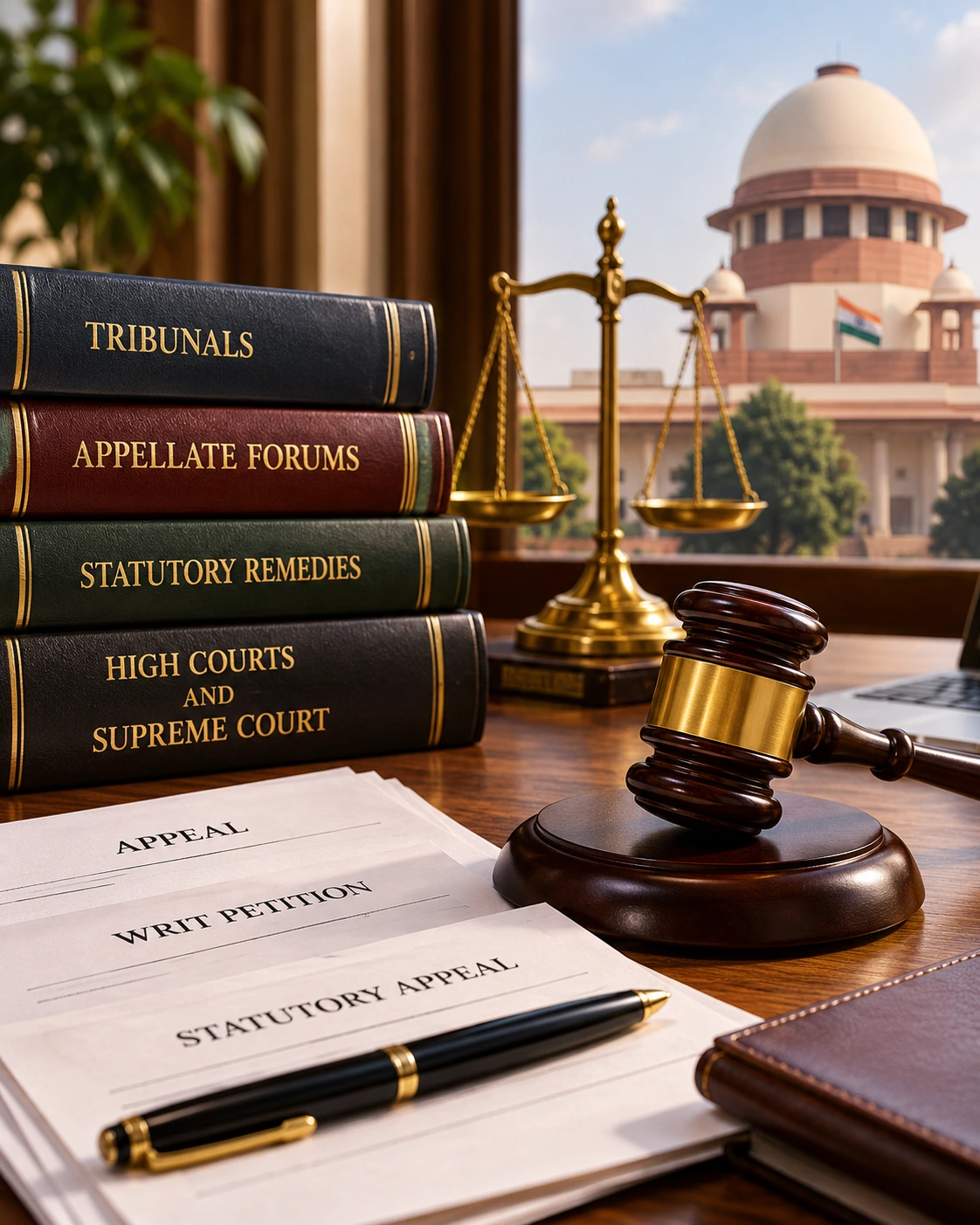
Tribunal & Appellate Practice
Tribunal and appellate practice concerns legal work relating to proceedings before specialised tribunals, appellate tribunals and statutory appellate forums in India, as well as related proceedings before the High Courts and the Supreme Court where legally maintainable. The applicable statutory framework depends on the nature of the matter and may include statutes establishing or governing specialised tribunals and appellate forums in areas such as taxation, corporate and insolvency matters, service matters, consumer disputes, regulatory matters, competition, telecommunications, securities and other specialised areas.
The nature and procedure of a tribunal or appellate matter depend on the nature of the underlying dispute, the applicable statute and the forum or authority having jurisdiction. Proceedings may involve specialised tribunals, appellate tribunals, statutory authorities or other competent forums, and may also involve proceedings before the High Courts or the Supreme Court where legally maintainable under the applicable statutory or constitutional framework.
Key Areas of Tribunal & Appellate Practice
An overview of the principal categories of tribunal and appellate matters before specialised forums and appellate authorities.
01. Tax Tribunals & Appellate Forums
Matters concerning appeals, revisions and related proceedings before tax tribunals and appellate authorities.
- Common Matters: Appeals before tax tribunals, appellate authorities and related proceedings.
- Key Issues: Appellate jurisdiction, maintainability, limitation and applicable procedures.
- Legal Focus: Applicable taxation statutes and the framework governing tax tribunals and appellate authorities, as applicable to the matter.
02. Corporate & Insolvency Tribunals
Matters concerning proceedings before tribunals dealing with corporate law, insolvency and related matters.
- Common Matters: Applications, appeals and related proceedings before corporate and insolvency tribunals and their appellate forums.
- Key Issues: Jurisdiction, maintainability and applicable statutory procedures.
- Legal Focus: Companies Act, 2013, Insolvency and Bankruptcy Code, 2016 and related frameworks, as applicable to the matter.
03. Service Tribunals & Administrative Forums
Matters concerning service-related disputes before administrative tribunals and appellate forums.
- Common Matters: Applications and appeals relating to service matters before the appropriate tribunal or authority.
- Key Issues: Jurisdiction, limitation and applicable procedural requirements under the relevant framework.
- Legal Focus: Administrative Tribunals Act, 1985 and related statutory frameworks, as applicable to the matter.
04. Consumer Commissions
Matters concerning consumer disputes before the consumer commissions and related appellate forums.
- Common Matters: Complaints, appeals and related proceedings before consumer commissions and appellate forums.
- Key Issues: Pecuniary jurisdiction, maintainability and applicable procedure.
- Legal Focus: Consumer Protection Act, 2019 and the framework governing consumer commissions, as applicable to the matter.
05. Regulatory & Sectoral Tribunals
Matters concerning proceedings before regulatory and sectoral tribunals across specified statutory areas.
- Common Matters: Appeals, applications and related proceedings before regulatory and sectoral appellate forums.
- Key Issues: Applicable statutory framework, jurisdictional scope and procedural requirements.
- Legal Focus: Applicable regulatory statutes and the framework governing the relevant tribunal or appellate authority, as applicable to the matter.
06. Writ & Constitutional Remedies
Matters concerning writ petitions and other constitutional proceedings arising from tribunal or appellate proceedings, where legally maintainable.
- Common Matters: Writ petitions, judicial review and related constitutional proceedings before the High Courts.
- Key Issues: Maintainability, scope of judicial or supervisory review, and applicable constitutional requirements.
- Legal Focus: Articles 226 and 227 of the Constitution of India, together with the applicable statutory and constitutional framework.
07. Statutory Appeals & Appellate Remedies
Matters concerning statutory appeals and related appellate remedies arising from orders or decisions of tribunals or competent authorities.
- Common Matters: Statutory appeals and related appellate proceedings under the applicable framework.
- Key Issues: Maintainability, limitation, scope of appeal and applicable procedural requirements.
- Legal Focus: The applicable statutory framework governing the relevant appeal or appellate remedy, as applicable to the matter.
08. Special Leave Petitions
Matters concerning special leave petitions before the Supreme Court arising from tribunal or appellate proceedings.
- Common Matters: Special leave petitions and related proceedings before the Supreme Court.
- Key Issues: Discretionary jurisdiction, maintainability and applicable requirements.
- Legal Focus: Article 136 of the Constitution of India and applicable framework, as applicable to the matter.
09. Enforcement & Related Proceedings
Matters concerning enforcement of orders, compliance with directions and related consequential proceedings.
- Common Matters: Enforcement of orders, compliance with directions and allied proceedings before the competent forum.
- Key Issues: Nature of the order, statutory mechanism for enforcement and applicable procedural safeguards.
- Legal Focus: Applicable provisions under the relevant statutory framework, together with other applicable laws and rules.
Legal Assistance in Tribunal & Appellate Practice
An overview of the legal assistance that may be relevant in tribunal and appellate matters, depending on the nature of the dispute, the applicable statute and the forum or authority having jurisdiction.
Pre-Filing Assessment & Advisory
Understanding the nature of the matter, the applicable statutory framework, the appropriate tribunal, appellate forum or court and the available remedies — before proceedings are initiated, where applicable to the matter.
Drafting & Filing of Appeals & Applications
Assistance relating to drafting and filing of appeals, applications, petitions, written submissions and related documentation before the competent tribunal, appellate forum or court, as applicable to the nature of the matter.
Interim Relief & Interim Directions
Assistance in matters involving interim relief or interim protection that may be sought during the pendency of proceedings, including, where legally maintainable, applications for stay or protective directions before the competent tribunal or court, depending on the facts and circumstances of the case.
Representation before Tribunals & Appellate Forums
Representation and assistance in proceedings before specialised tribunals, appellate tribunals and statutory appellate forums — including submissions, evidence, hearings and related procedural matters — in accordance with the applicable statutory framework, subject to the nature and requirements of the matter.
Writ, Constitutional & Further Remedies
Assistance in matters involving writ petitions, judicial or supervisory review and other legally available remedies arising from tribunal or appellate proceedings before the High Courts and the Supreme Court, where legally maintainable. This may include proceedings under Articles 226 and 227 of the Constitution of India before the High Courts, and special leave proceedings under Article 136 before the Supreme Court, together with the applicable statutory and constitutional framework.
Enforcement & Compliance
Assistance in matters concerning enforcement of orders, compliance with statutory directions and related consequential proceedings before the competent forum, in accordance with the applicable statutory framework, subject to the nature and requirements of the matter.

Stages in a Tribunal or Appellate Matter
A procedural overview of how a tribunal or appellate matter may progress before the competent tribunal, appellate forum or court.
Underlying Order, Decision or Dispute
A tribunal or appellate matter may arise from an order, decision or direction of an authority, tribunal or other competent forum, or from a statutory dispute or proceeding, depending on the applicable legal framework and the nature of the matter.
Pre-Filing Assessment & Forum
The nature of the matter, applicable statutory framework, appropriate tribunal, appellate forum or court and the available remedies are considered before proceedings are initiated, as applicable to the matter.
Filing of Appeal or Application
The appeal, application or other prescribed process may be filed before the competent tribunal, appellate forum or court, in accordance with the applicable statutory framework and within the prescribed time, where applicable.
Notice & Response
Where provided under the applicable framework, notice may be issued to the concerned parties, who may submit their response, reply or objections, as applicable to the nature of the proceeding.
Hearing & Consideration
Where required, the matter may be considered through a hearing or other prescribed process, including examination of relevant material and submissions, as applicable to the nature of the proceeding.
Order, Decision or Judgment
Following consideration of the relevant material and submissions, where applicable, the competent tribunal, appellate forum or court may pass an order, decision or judgment in accordance with the applicable law and the facts of the matter.
Further Remedies
Statutory appeals or other legally available remedies may arise from an order, decision or judgment, where provided by and maintainable under the applicable statutory or constitutional framework. Depending on the matter, proceedings may also involve judicial or supervisory review before the appropriate court, where legally maintainable.
Enforcement & Compliance
Depending on the applicable statutory framework, enforcement of orders, compliance with directions or other consequential proceedings may follow before the competent authority or forum.
The sequence illustrated is indicative and does not represent a mandatory procedure applicable to every tribunal or appellate matter. Depending on the nature of the matter, the applicable statute and the competent authority, stages may occur in a different order, concurrently, or may not arise at all. Interim relief or protection may be sought at an appropriate stage where legally maintainable.
How a Tribunal or Appellate Matter May Progress
An overview of where a tribunal or appellate matter may arise and how it may proceed through statutory appeals or other legally available remedies, depending on the applicable statute.
Decision or Dispute
Forum Proceedings
or Judgment
Where Maintainable
Underlying Order, Decision or Dispute
A tribunal or appellate matter may arise from an order, decision or direction of an authority, tribunal or other competent forum, or from a statutory dispute or proceeding, depending on the applicable legal framework and the nature of the matter. The appropriate tribunal, appellate forum or court is considered before proceedings are initiated.
Tribunal or Appellate Forum Proceedings
The matter may be placed before the competent tribunal, appellate forum or court through the filing of an appeal, application or other prescribed process. Where provided under the applicable framework, notice may be issued to the concerned parties, and a hearing or other prescribed process may be conducted.
Order, Decision or Judgment
Following consideration of the relevant material and submissions, where applicable, the competent tribunal, appellate forum or court may pass an order, decision or judgment in accordance with the applicable law and the facts of the matter.
Further Remedies, Where Maintainable
Where legally maintainable, statutory appeals or other legally available remedies may arise from an order, decision or judgment, where provided by and maintainable under the applicable statutory or constitutional framework. Depending on the matter, proceedings may also involve judicial or supervisory review before the High Courts under Articles 226 and 227, or special leave proceedings before the Supreme Court under Article 136, where legally maintainable.
Documents & Information That May Be Relevant
The documents and information relevant to a tribunal or appellate matter depend on the nature of the matter, the applicable statute and the forum or authority having jurisdiction.
Order or Decision Under Challenge
The order, decision, direction or other determination of the original authority, tribunal or forum that is the subject matter of the appeal, application or proceeding, together with related records and communication of the said order, where applicable.
Appeal, Application & Pleadings
The appeal, application, petition or other initiating document, together with statements of fact, grounds, written submissions, counter-affidavits, rejoinders and other pleadings filed before the competent tribunal, appellate forum or court, as applicable to the matter.
Records of Original Proceedings
Records of the original proceedings from which the matter arises, including pleadings, evidence, exhibits and other material forming part of the record before the original authority, tribunal or forum, as applicable to the matter.
Statutory Notices & Communications
Statutory notices, show-cause notices, demand notices and other communications issued by or exchanged with the competent authority, tribunal or concerned parties, together with replies, representations and other related correspondence, as applicable to the matter.
Supporting Documents & Evidence
Documents, agreements, accounts, correspondence, technical records, affidavits, witness statements and other supporting material relevant to the nature of the tribunal or appellate proceeding.
Orders, Judgments & Legal Records
Orders, decisions, judgments, directions and other legal records connected with the matter, including records of proceedings before the competent tribunal, appellate forum or court, where applicable.
Please Note: The documents relevant to a tribunal or appellate matter vary according to the nature of the matter, the applicable statutory framework and the forum or authority involved. Not every document listed above will be relevant to every matter. The information provided is a general overview and should not be treated as legal advice for any particular matter.
Frequently Asked Questions
Common questions about tribunal and appellate practice, statutory frameworks, appellate forums and available remedies in India.
Tribunal and appellate practice concerns legal work relating to proceedings before specialised tribunals, appellate tribunals and statutory appellate forums in India, as well as related proceedings before the High Courts and the Supreme Court where legally maintainable. The applicable statutory framework depends on the nature of the matter and may include statutes establishing or governing specialised tribunals and appellate forums in areas such as taxation, corporate and insolvency matters, service matters, consumer disputes, regulatory matters, competition, telecommunications, securities and other specialised areas.
A court forms part of the constitutional judicial framework, whereas a tribunal is generally constituted under a specific statute to adjudicate specified categories of disputes within the jurisdiction conferred by that statute. Tribunals exercise powers and follow procedures prescribed by their enabling legislation and applicable rules. Their decisions remain subject to the constitutional and statutory framework governing judicial review and other available remedies.
India has several specialised tribunals and appellate forums established under various statutes, including, among others, tribunals dealing with taxation, corporate and insolvency matters, service matters, consumer disputes, regulatory and sectoral matters, competition, telecommunications and securities. The applicable tribunal and appellate forum depend on the nature of the underlying dispute and the relevant statutory framework. The framework governing tribunals has also been subject to statutory reform from time to time.
The remedies available against an order of a tribunal depend on the statutory framework under which the order was passed. Where provided by and maintainable under the applicable law, remedies may include statutory appeals before the prescribed appellate forum, applications for review where such review is available, or other legally available remedies. Proceedings before the High Courts under Articles 226 and 227 of the Constitution may also arise in appropriate cases, subject to the applicable constitutional and legal requirements. Further proceedings before the Supreme Court, including special leave proceedings under Article 136 where applicable, depend on the nature of the matter and the applicable constitutional framework.
Article 226 of the Constitution of India confers writ jurisdiction on the High Courts for the enforcement of fundamental rights and for other purposes specified in the Article. Article 227 confers supervisory jurisdiction on the High Courts over courts and tribunals within their territorial jurisdiction, subject to the constitutional framework. The two provisions operate in distinct constitutional capacities and are subject to the applicable constitutional and statutory framework. Whether a particular remedy is maintainable under either provision depends on the nature of the matter and the applicable legal requirements.
Article 136 of the Constitution of India confers discretionary jurisdiction on the Supreme Court to grant special leave to appeal from judgments, decrees, determinations, sentences or orders passed or made by any court or tribunal in India, subject to the constitutional limitations, including those contained in Article 136(2). A Special Leave Petition is not a matter of right and is subject to the discretionary jurisdiction of the Supreme Court. Its maintainability and the scope of interference depend on the constitutional framework and applicable judicial principles.
The limitation period for filing an appeal or application before a tribunal or appellate forum depends on the statutory framework governing the relevant appeal or application. Different statutes prescribe different limitation periods, and the applicable limitation provisions, along with provisions for condonation of delay where maintainable, are governed by the relevant statute and applicable law. The specific limitation period applicable to a matter depends on the nature of the order or decision and the statutory framework in question.
The requirement and scope of legal representation before a tribunal depend on the statutory framework governing the tribunal and its procedure. Some statutes expressly permit representation by advocates or authorised representatives, while others may prescribe specific rules relating to appearance and representation. The applicable provisions governing representation, and the nature of assistance that may be provided, depend on the relevant tribunal and its governing statute.
Depending on the nature of the matter, a person or entity affected by an order, decision or direction of a tribunal, statutory authority or other forum, or a party to the proceedings, or an authorised representative or other concerned person, may seek legal assistance in relation to the matter. Representation before the tribunal, appellate forum or court is subject to the applicable statutory framework and procedural requirements.
There is no fixed period applicable to every tribunal or appellate matter. The duration may depend on the nature of the matter, the applicable statutory framework, the competent tribunal, appellate forum or court, whether interim applications, objections, further remedies or related proceedings arise and other procedural circumstances. Some matters may be resolved relatively quickly, while others may take longer, depending on the facts and the applicable legal framework.
Related Legal Areas
Explore related legal information and resources relevant to tribunal and appellate practice, statutory remedies and specialised forums.
Our Practices
Explore other areas of legal practice that may be relevant to tribunal and appellate matters.
Read More → 02Orders & Judgments
Read selected court orders and judgments published for legal information and awareness.
Read More → 03Legal Insights
Explore articles and explanatory content on legal issues, court decisions and developments.
Read More → 04Legal Resources
Access useful legal resources and reference material relating to courts, procedures and legal practice.
Read More →Discuss Your Legal Matter
For information regarding a tribunal or appellate matter or our areas of practice, you may contact Corpus Juris India through the available contact channels.